

About academy
The Latvian Academy of Culture (LAC) is an interdisciplinary culture and arts university, focusing on culture and art research, artistic creativity; it is also a centre for creative industries.
The Latvian Academy of Culture has been a space for greetings, conversations, celebrations and daily life since 1990.
Our Values
Contemporaneity
Based on tradition and experience, we work today to create a tomorrow. We are up to date and present in today’s processes, able to influence and direct them. Permanently evolving by integrating the novel, the advanced and the most significant.
Quality
We set the highest standards for ourselves. We are reliable and appreciated both by our students and lecturers, as well as by the employers and entire society.
Openness
We are interested in getting to know and accepting the different, the diverse and the multifarious. Available, promoting cooperation and creation of synergy.
WHO ARE WE?
The Latvian Academy of Culture is an arts university, an institution of higher education and research, which was established on the 29th of December, 1990 by a decision of the Council of Ministers of the Republic of Latvia.The Latvian Academy of Culture administers accredited academic Bachelor’s, Master’s and Doctoral study programmes. The Academy is enganged in research and artistic creativity, which are implemented by two Academy departments: the Academy Research Centre of and the Centre for Creative Activity. The main representative and management bodies of the Latvian Academy of Culture are the Constitutional Assembly, the Senate, Rector and the Academic Court of Arbitration. |
|
STUDY ACCREDITATION
On December 19, 2023, at the meeting of the Study Quality Commission of the "Academic Information Centre”, it was decided to: accredit for six years the study direction "Arts" and corresponding study programmes of the Latvian Academy of Culture (No.2023/53-A).
EXTERNAL DEPARTMENTS
Eduards Smiļģis Theatre Museum
In accordance with the Cabinet of Ministers of the Republic of Latvia who issued an ordinance to June 2, 2009 to reorganise the public administrations under the supervision of the Ministry of Culture, it was decided that the government agency’ “Museum of Literature, Theatre and Music” and the department “Eduards Smiļģis Theatre Museum” shall be handed over to the Latvian Academy of Culture starting with October 1, 2009.
Latvia Film Museum
In accordance with the Cabinet of Ministers of the Republic of Latvia who issued an ordinance on June 2, 2009 to reorganise the state agency “Centre of National Cinema” it was decided to be modified from an agency to a direct state administration and its department “Latvia Film Museum” will be transferred to the Latvian Academy of Culture starting with January 1, 2010.
RECTORS
HISTORY
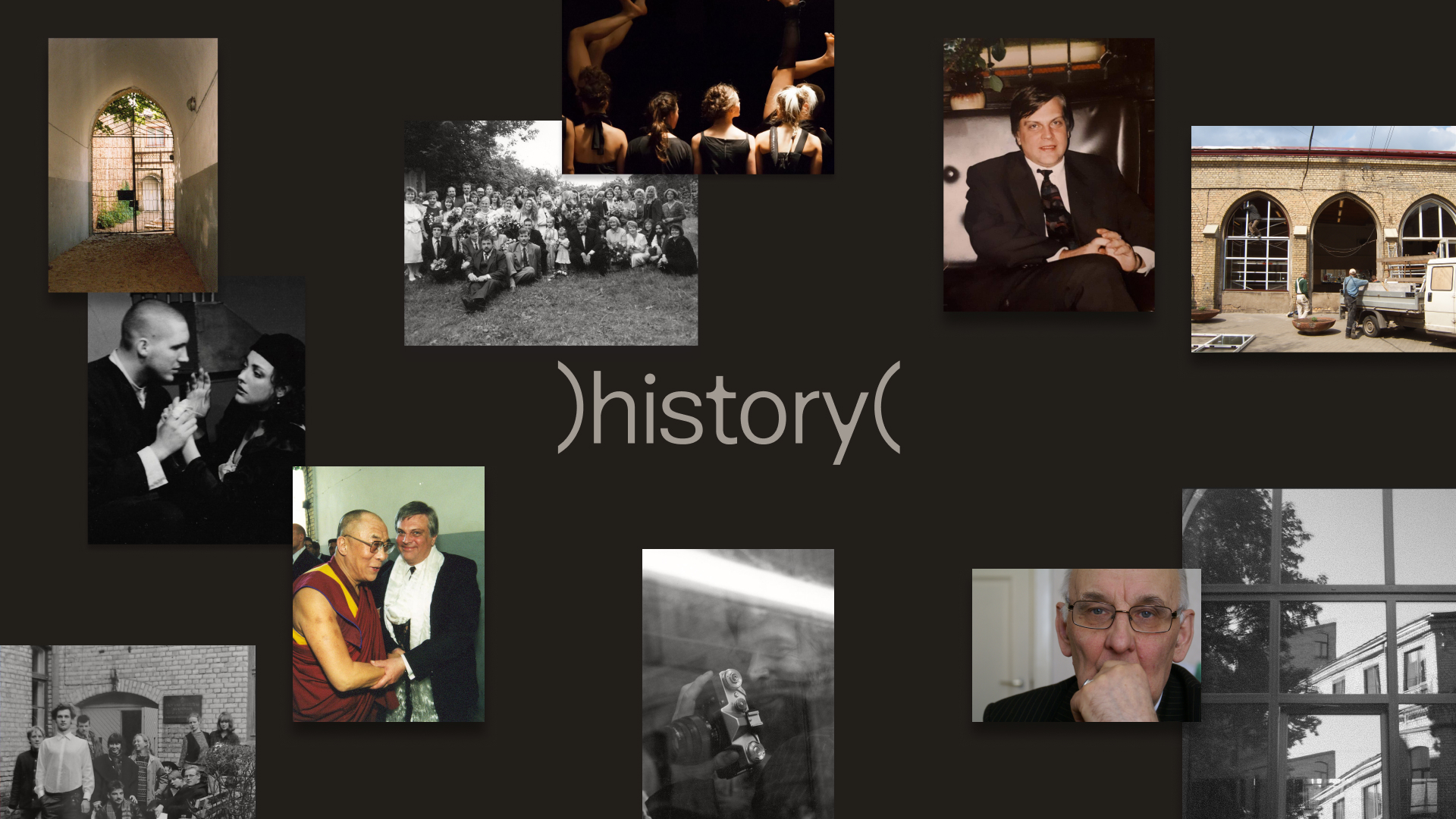
The Latvian Academy of Culture was established and created in the restored state of Latvia, and it has been developing together with it. Many changes had already taken place: a Plenary Session of Creative Unions had been organised; the Council of Creative Unions of Latvia had already taken place; the Popular Front of Latvia had been founded. Many other associations, unions and organisations had been renewed: the Association of Latvian National Culture Societies; the Latvian Union of Scientists; the Latvian Olympic Association, Riga Latvian Society and many others. It was at the Latvian Culture Forum in a resolution of March 1990 when an idea was expressed that there was a need to establish a new university – an Academy of Culture. The adoption of the Declaration of the 4th of May was followed a general uplift, which was manifest in various opinions on the significance of the nation’s spirit in turns of fate in Latvia. Pēteris Laķis was one of the leaders of the People’s Front. As he was a philosopher and Head of the Department of Sociology at the University of Latvia, he had also become Chairman of the Commission on people’s education, science and culture in the Supreme Council. He spoke about the possibility of creating a new culture university outside of Riga, for example, in Sigulda, where being away from the bustle of the big city and industrial noise, students and professors could indulge in intellectual and creative studies The idea of a Theatre Institute that had existed during the post-war years was being entertained at the same time. The Minister of Culture Raimonds Pauls listened to many opinions before deciding to focus on the creation of a new culture and arts university that would also provide theatre studies because the Academy of Music (previously called Conservatoire) no longer offered these studies.
The new institution of higher education was planned to be created on the basis of the Institute for Professional Development of Cultural Workers and the Riga Technical School of Culture and Education. Pēteris Laķis was appointed Rector of the Latvian Academy of Culture. Together with Jānis Siliņš, Head of Culture Education Department at the Jāzeps Vītols Latvian Conservatoire, they created the drafts for Study programmes and addressed the many organisational, material and financial problems, which were not that simple at the time.
When the newly created Admission Commission started working at the Latvian School of Culture in Bruņinieku Street in summer 1991, the air was filled with optimism and hope. 25 students were enrolled in Department of Culture Theory, History and Administration and five students in each of the Cultural Communication specialities: Latvia – Denmark, Latvia – Sweden, Latvia – Norway, Latvia – Poland and Latvia – Lithuania. About ten days before the start of the first Academic Year at the Latvian Academy of Culture, the new Rector Pēteris Laķis called a Department meeting at the Latvian Parliament because he was not allowed to leave the Parliament building during the nervous days of the August Coup. However, the coup of opponents of democracy failed, and the Latvian Academy of Culture started the first Term with a solemn service at the Riga Dom Church. The first lectures and classes took place at 24 Ludzas Street, which previously housed the Institute for the Qualification of Cultural Workers of the Ministry of Culture, but before that, it was used as a fire station and other institutions. Today, this historical building in the Moscow suburb (DE: Moskauer Vorstadt) with its courtyard and blooming apple tree garden has been associated with the special atmosphere of the Academy by many generations of students. Since the management of the Latvian School of Culture wanted to keep their independence, this wish was respected. Later this School was renamed the Latvian Culture College. Only after a government decision of 2012 has it developed closer cooperation with the Latvian Academy of Culture as a branch of the Latvian Academy of Culture.
The first 39 Arts Bachelor degrees were conferred at the Latvian Academy of Culture in 1995, and the first Master’s Degrees were conferred in 1997. In 2003 Deniss Hanovs was the first one to present his Doctoral Dissertation in Arts at the Promotion Board meeting.
SIGNIFICANT EVENTS
2026 | International student short film festival “Easy to be young?” takes place for the first time LAC unveils new visual identity In May, LAC marks its 35th anniversary by organizing an alumni reunion as a symbolic celebration of being together in the historical garden in Ludzas iela 24 before moving to the new building |
| 2025 | Latvian College of Culture becomes a structural unit of the Latvian Academy of Culture through consolidation The government supports a draft law for the handover of the “Tabakas fabrika” to the Latvian Academy of Culture free of charge for education and cultural purposes The researchers at the Latvian Academy of Culture take part in Scientists’ Night (Zinātnieku nakts) for the first time |
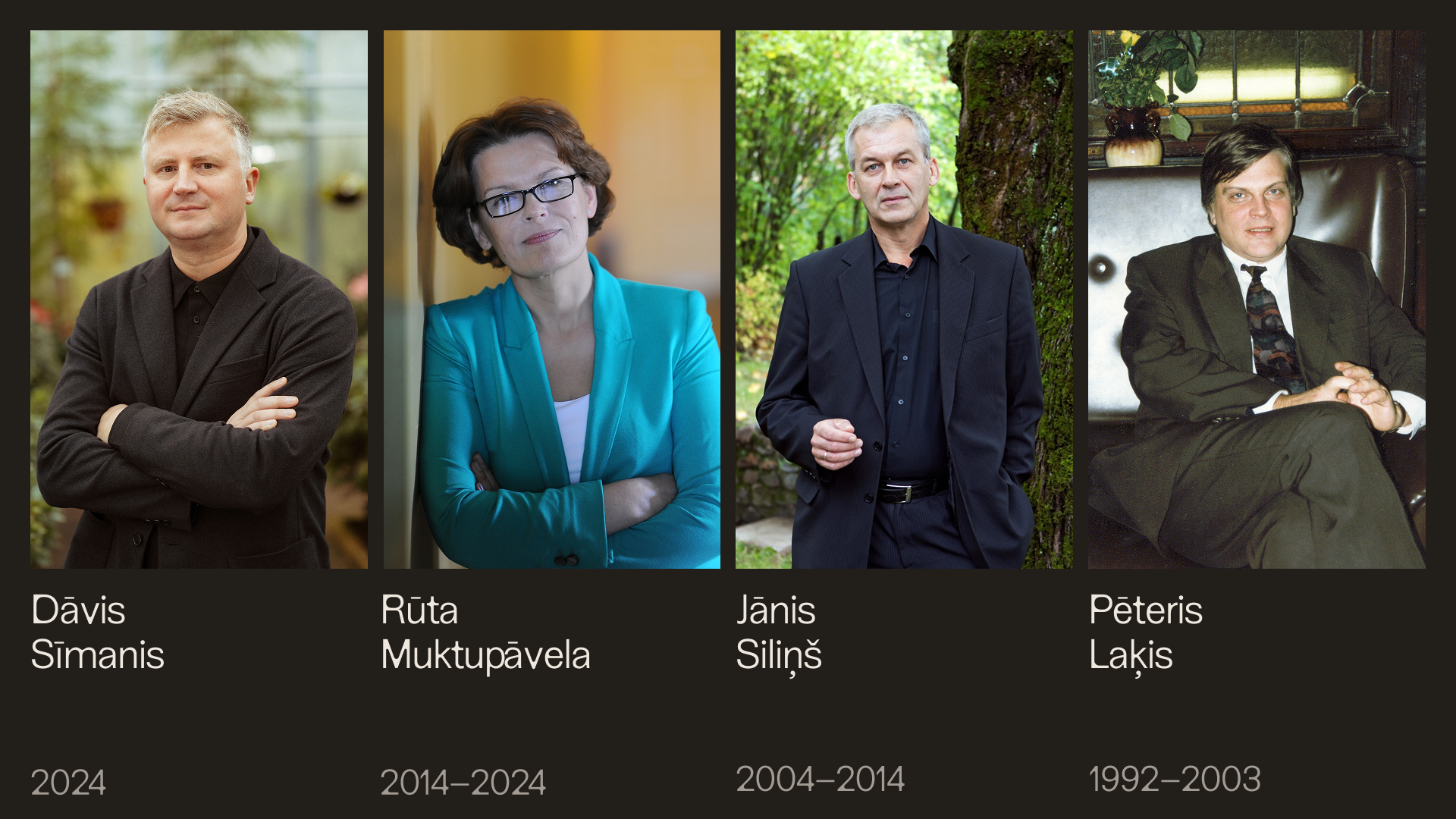
| 2024 | Cabinet of Ministers accepts Dāvis Sīmanis as rector at the LAC LAC becomes a member of the European University Alliance ACE2-EU New spaces for the LAC Film School, Institute or Arts and Cultural Studies, and LAC Lifelong Learning Centre are opened at the Tabakas fabrika creative quarter |
| 2023 | The first professor Pēteris Laķis New Scientist Award has been awarded LAC receives significant financial support and carries out many large-scale science and research projects, once again affirming the impact of the Institute of Arts and Cultural Studies within the national and international field |
| 2022 | Under the leadership of Dace Melbārde, a new decision-making body – council begins its work State research programme project “Cultural capital as a resource for sustainable development of Latvia” / CARD implemented by the LAC and partners receives exceptional praise from international experts, who emphasize that it has reached the scale of an interdisciplinary mega-study LAC National Film School is accepted in the world’s most prestigious film school association CILECT |
| 2021 | Interdisciplinary programmes are strenghtened and closer internationalization is attained, fostering a better enironment for research and innovation in creative industries (including in collaboration with other higher Latvian universities). LAC celebrates its 30 year anniversary online |
| 2020 | A licence is obtained for the rights to implement a joint professional doctoral study programme “Arts” together with the Art Academy of Latvia and Jāzeps Vītols Latvian Academy of Music A licence is obtained for the rights to implement an academic master’s study programme “Cultural Heritage Governance and Communication”, “Creative Industries and Growth Management” (together with Riga Technical University) Development of the first-phase construction project of the “Tabakas fabrika” creative quarter |
| 2019 | LAC is actively involved in the planning of architecture and infrastructure of the development of the “Tabakas fabrika” creative quarter in Miera street, where all LAC structural units are planned to be consolidated in the future |
| 2018 | A licence is obtained for the rights to implement an academic master’s study programme “Audiovisual and Performing Art” An international design contest is being held to develop an architectural vision of a complete redevelopment of the “Tabakas fabrika” creative quarter, won by the architectural firm “NRJA” Permanent site of the LAC National Film School is established in Elijas Street 17, becoming a modern centre for the new generation of young film creators |
| 2017 | New subprogramme “Culture and Arts Studies” under the bachelor study programme “Arts” is established Department of Theatre and Audiovisual Arts is reorganized and “Department of Audiovisual Arts” and “Department of Stage Arts” are established Licence for the rights to implement an academical bachelor study programme “Creative Industries” (together with Riga Technical University) Agreement is signed for collaboration between State-owned joint-stock company “Valsts nekustamie īpašumi” and Latvian Academy of Culture to establish an interdisciplinary cultural, educational, and creative industry centre in the “Tabakas fabrika” creative quarter On 1 October, the basics for development of the LAC National Film School are set out in order to distinguish and emphasize the significance of audiovisual arts education on a national scale |
| 2016 | LAC celebrates its 25 year anniversary with an ambitious programme – conference “ZinātMāksla” for students and alumni takes place, as well as a festive garden party and an alumni reunion Licence for the rights to implement the academic bachelor study programme “Audiovisual Art” |
| 2015 | Licence for the rights to implement the academic bachelor study programme “Contemporary Dance” Public discussions and realistic planning works begin for relocating the LAC from the historical site in Ludzas Street to a new culture quarter, addressing the issue of limited infrastructure |
| 2014 | New subprogrammes “Drama and Text Studies”, “Audiovisual and Stage Art and Production” under the bachelor study programme “Arts” are established Memorandum of Understanding is signed between the Ministry of Culture of The Republic of Latvia, State-owned joint-stock company “Valsts nekustamie īpašumi” and the Latvian Academy of Culture for collaboration in the creation of a centre for interdisciplinary cultural, educational and creative industries in the “Tabakas fabrika” creative quarter On 14 May, the Cabinet of Ministers confirms Rūta Muktupāvela as rector at the LAC HABITUS research project – a breakthrough in the development of the Scientific research centre begins |
| 2013 | New subprogramme “Audiovisual and Stage Art Theory” under the bachelor study programme “Arts” is established On 22 May, the field of study “Arts” receives accreditation Stage production ĀRĀ (Legend of the Contemporary Dance Art Study Programme) |
| 2012 | On 1 September, the renovated building for theatre studies “Zirgu pasts” is opened after reconstruction, becoming the first building specially intended for stage art studies in Latvian history |
| 2011 | On 31 December, state institition of education Latvian College of Culture was reorganised and handed over to the Latvian Academy of Culture For the first time, LAC together with Ministry of Culture of the Republic of Latvia organised a “Cultural Canon” competition for pupils from form 10 to 12 New subprogramme “Culture and Cross-Cultural Studies” under the master’s study programme “Arts” is established On 7 March, LAC Creative Activities Centre where students can integrate academic knowledge and creative practices |
| 2010 | On 1 January, Riga Film Museum was reorganised and handed over to the Latvian Academy of Culture In autumn, a stage and audiovisual arts student festival “The Autumn of the Patriarch” (Patriarha rudens) is organised for the first time, which becomes a long-standing tradition |
| 2009 | Eduards Smiļģis Theatre Museum, a structural unit of Museum of Literature, Theatre and Music, is reorganised and handed over to the Latvian Academy of Culture |
| 2008 | LAC and Ministry of Culture continue to process the addition of Riga Film Museum and Eduards Smiļģis Theatre Museum as structural units to the academy |
| 2007 | Period of preparation and decision-making about gradual integration of many relevant institutions, including museums and education institutions, into the structure of the academy |
| 2006 | New subprogramme “Audiovisual Art” under the master’s study programme “Arts” is established On 3 June, the first alumni reunion of the Latvian Academy of Culture takes place On 23 May, “Scientific Research Centre” (since 2016 – LAC Institute of Arts and Cultural Studies) is established, which begins organising goal-oriented and systematic scientific work For the first time, music and arts festival “Valpurģi” takes place |
| 2005 | LAC celebrates its 15 year anniversary Interdisciplinary study programmes are strenghtened and developed, such as “Sociology and Management of Culture” |
| 2004 | On 29 April, scientist and professor Jānis Siliņš is elected as the second LAC rector |
| 2003 | New subprogramme “Management of Media and Culture” under the master’s study programme “Arts” is established On 14 November, Pēteris Laķis passes away |
| 2002 | The Academy is significantly expanding opportunities for international exchange students Upon the initiative of Valmiera’s Theatre, the production “The Lost Son” (Pazudušais dēls) by director and lecturer Māra Ķimele premiered in April 2002 to a crowded audience in Valmiera’s Theatre Rehearsal Hall, bringing together the Valmiera’s Theatre middle-generation actors and the third year acting students from the Latvian Academy of Culture, part of the Valmiera class led by Pēteris Krilovs. The production became one of the highlights of Latvian theatre at the start of the 21st century, winning the Blaumanis festival and three “Spēlmaņu nakts” awards |
| 2001 | On 14 June, LAC is officially accredited as a state university LAC brings in a new generation of lecturers (Zane Grigoroviča, Agnese Hermane, Daina Teters, and Gunta Ošeniece) in humanities and arts studies |
| 2000 | New subprogramme “Museology, Film and Video Directing” under the master’s study programme “Arts” is established LAC celebrates its 10-year anniversary and begins systematically expanding its international network with other European universities of arts and humanities |
| 1999 | New subprogramme “Modern Dance Choreography” under the bachelor study programme “Arts” is established |
| 1998 | New subprogramme “Audiovisual culture” under the bachelor study programme “Arts” is established First doctoral study programme “Arts” is established at the LAC (first students are accepted in 1999) The academy secures a stable status as a state budget financed institution, and the number of students exceeds 400 |
| 1997 | New subprogrammes “International Cultural Relations: Latvia – Nordic Countries”, “Sociology of Culture and Public Relations”, “Theatre, Film, and TV Dramaturgy” under the bachelor study programme “Arts” are established The historical actor and director course led by P. Krilovs graduates the LAC, and its alumni already begin to breathe new life into Latvian theatre scene Pēteris Krilovs stage production “Brothers Karamazov” (Brāļi Karamazovi) based on the novel by Fyodor Dostoevsky, is premiered – a diploma project in acting that immediately received international praise |
| 1996 | New subprogrammes “Latvian Culture and Traditional Culture” and “Television Director” under the bachelor study programme “Arts” are established LAC Constituent Assembly makes important decisions regarding the Constitution, aligning the academy’s functions with the new Law on Higher Education Institutions and strengthening academic freedom |
| 1995 | LAC concludes its first full study cycle, celebrating the graduation of the academy’s first bachelor students First master’s study programmes: master’s degree programme in the humanities “Arts”, subprogrammes: “Theory and History of Culture”, “Performing Arts”, “Cultural Management” |
| 1994 | New subprogrammes “History and Criticism of Literature Theory”, “Sociology of Culture”, “Film and Television Operator” under the bachelor study programme “Arts” are established Following the reorganisation of state administration, LAC renews a close collaboration with the Ministry of Culture. The first major state grants for scientific research are awarded, including research on the identity of national Latvian culture |
| 1993 | Pēteris Krilovs begins leading a course on theatre directing, which nurtures a powerful generation of theatre directors and actors over the following years (including V. Kairišs and Dž. Dž. Džilindžers) New subprogrammes “Film Operator”, “Film Directing” “Drama Theatre Acting”, “Drama Theatre Directing” under the bachelor study programme “Arts” are established |
| 1992 | On 18 May, LAC Constituent Assembly passes the academy’s Constitution The Student Union is established New subprogrammes “Puppet Theatre Actor”, “Cultural Communications (Latvian – Danish, German, Finnish)” under the bachelor study programme “Arts” are established |
| 1991 | The first enrolment of students begins their studies in September (63 students) First bachelor study programme is established: bachelor study programme in the humanities “Arts” and its subprogrammes: “Theory, History, and Administration of Culture”, “Cultural Communications (Latvian – Polish, Danish, Swedish, Norwegian, Lithuanian, French, Jewish)” |
| 1990 | On 29 December, the Latvian Academy of Culture is officially established with the decision of the Council of Ministers of the Republic of Latvia, and its founder – philosopher Pēteris Laķis – becomes its first rector |