

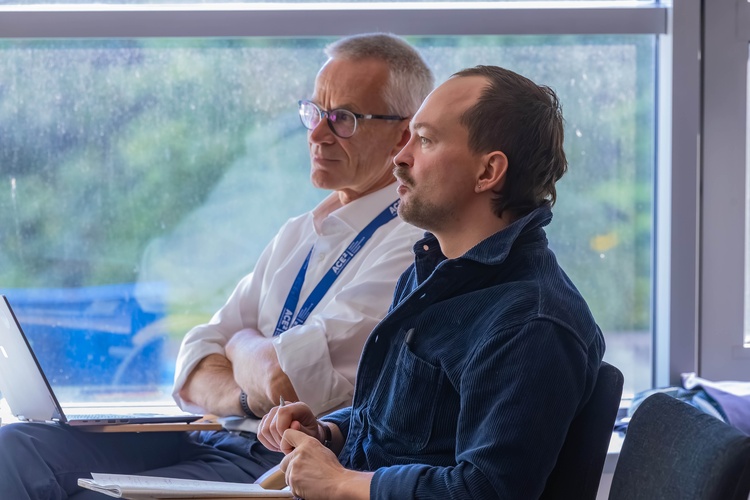
From an Idea to an International Research Project: LAC Doctoral Student Evarts Melnalksnis Shares His Experience at the ACE²-EU Grants Academy
From 7 to 11 September 2026, the Medical University of Gdańsk, Poland, hosted the ACE²-EU Grants Academy, an intensive training programme organised within the ACE²-EU European University Alliance. Among the participants was Evarts Melnalksnis, Research Assistant in Cultural and Arts Studies and doctoral student at the Latvian Academy of Culture (LAC). He shares his experiences and insights into developing international research projects, European Union funding opportunities, and the importance of collaboration in implementing competitive projects.
Participating in the intensive training programme in Gdańsk was an excellent opportunity to explore the specific requirements of European Union research projects and deepen my understanding of the principles and opportunities for international collaboration within the European Research Area. Throughout the week, we explored several key aspects: the importance of strong project leadership and a core team within an international consortium, the distribution of responsibilities and roles among partners, the work and resources required to prepare a competitive project proposal, and the challenges of collaboration and communication. We also explored EU research project databases and official platforms, as well as Work Programmes that define research funding priorities and directions. In addition, I gained a deeper understanding of the EU's research and innovation programme Horizon Europe and the Interreg cross-border and transnational cooperation programmes, which may also support research activities depending on the specific call requirements.
One of the most valuable insights was the importance of policy and strategic planning documents in developing project ideas. These documents help identify strategic directions, current needs, key concepts, and challenges that need to be addressed. They are worth exploring as sources of ideas and inspiration when preparing project proposals in the fields of arts, culture, or science, as they reflect priorities established through extensive evaluation and consultation processes. At the same time, the training encouraged me to reflect on Latvia's opportunities to become more actively involved in European research projects. Latvia still lags behind many other European countries in terms of EU research funding secured, highlighting the importance of further developing our international collaboration skills and making more strategic use of the opportunities offered by EU membership.
Alongside the professional experience, Gdańsk itself and its history left a particularly strong impression on me. I was deeply moved by the stories connected to the place where the training took place. Once an important Hanseatic city, Gdańsk's urban landscape still reveals similarities to both Amsterdam and Riga. After the city was reduced to ruins during the Second World War, its residents decided to rebuild it, allowing us to experience its unique character and spirit even today.
Over the past decade, two major museums have also opened in the city, both remarkable in their scale and scope. One is dedicated to the Second World War, which began just outside Gdańsk, while the other tells the story of the Solidarity movement, which emerged at the Gdańsk Shipyard and, through the determination of Polish workers, helped irreversibly undermine the foundations of the Soviet-controlled Eastern Bloc.
Despite this difficult historical legacy, the Polish people have a remarkable zest for life, resilience, and a wonderful sense of humour – qualities well worth taking home alongside the skills gained in developing international research projects.
I have taken away three key insights from this intensive training week that will guide my future professional work.
First, a successful international project depends on a strong core team united by shared goals and values. Second, it is essential to follow current policy and strategic planning documents at both national and international levels, understand the priorities they establish, and connect them to project ideas. Third, it is equally important to take a strategic approach to one's individual development as a researcher, recognising the opportunities, contexts, and key milestones relevant at different stages of professional growth.
Further information about EU-funded research projects, participating institutions, research topics, and the distribution of funding across countries is available in the CORDIS database. Learn more about the ACE²-EU Grants Academy.
Funded by the European Union. Views and opinions expressed are, however, those of the author(s) only and do not necessarily reflect those of the European Union or the European Education and Culture Executive Agency (EACEA). Neither the European Union nor EACEA can be held responsible for them. Project No. 101177596. The project is co-financed by the Ministry of Culture of the Republic of Latvia.
Prepared by Evarts Melnalksnis