Riga Conference Highlights Education and Collaboration as Keys to Advancing Culture and Health
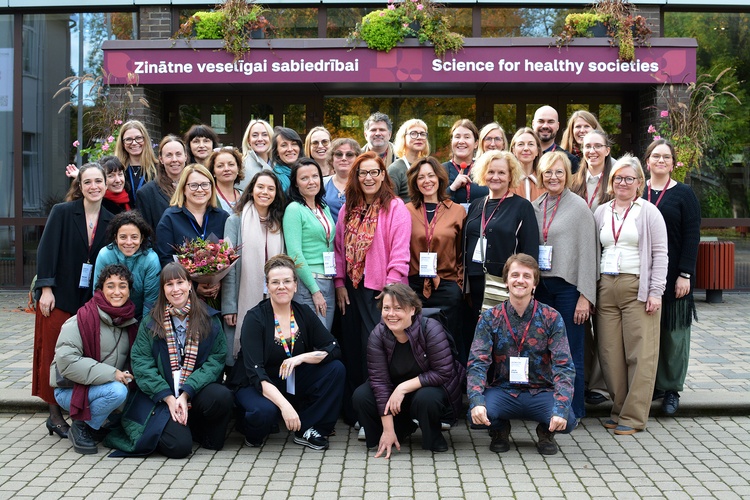
The international conference “Learning to Care: Education and Training in Culture and Health”, held on 15-16 October at Rīga Stradiņš University, explored how education, professional skills and cross-sector partnerships can strengthen the contribution of arts and culture to health and well-being. The programme connected experiences from Latvia, Estonia and Lithuania with perspectives from across Europe.
Organised by the Latvian Academy of Culture and the Northern Dimension Partnership on Culture Secretariat, in cooperation with Rīga Stradiņš University, the event brought together cultural practitioners, health and social care professionals, educators, researchers and policymakers. It drew on two EU-supported projects: WITAC and CARE.
New skills for cross-sector cooperation
A major focus was education and training in culture and health, from university curricula to learning in cultural institutions and communities. The conference presented the Baltic micro-qualification programme “Culture and Health: Managing Cross-Sectoral Initiatives”, developed by three Baltic universities through WITAC. Graduates introduced four pilot initiatives showing how professionals from different fields can jointly design activities for people with diverse needs, including those facing health challenges or social exclusion. Presentations featured “Museums on Prescription” in Cēsis, cooperation between Tartu memory institutions and Tartu University Hospital, and training for healthcare clowning through RED NOSES. Speakers also explored mental well-being in festival curation, health literacy and campaigns encouraging public engagement with arts and well-being - developed within the CARE project. These examples highlighted the diverse settings in which cross-sectoral capacity-building initiatives can be developed and implemented.
Policy dialogue
Two panel discussions explored the opportunities and challenges of developing culture and health as a sustainable cross-sectoral field. The opening panel focused on education and training, emphasising the importance of interdisciplinary, practice-based learning and developing competences for effective collaboration across professional boundaries. The closing policy panel examined the current state of culture and health in the Baltic countries and potential next steps, highlighting the need to move beyond individual initiatives towards stronger institutional partnerships, supportive policies, sustainable funding and long-term capacity building. A common conclusion shared by the speakers was that the challenges facing formal and non-formal education in culture and health cannot be separated from those affecting the cross-sectoral field itself. Gaps in the recognition, development and institutional support of culture and health are inevitably reflected in the availability and quality of education and training opportunities.
Artists’ voices and hands-on learning
Artists and cultural professionals played an integral role throughout the conference, bringing their creative practices, experiences and perspectives into the discussions on culture and health. On 15 October, artistic interventions involving movement, calligraphy, body percussion and participatory performance by Eva Vēvere offered opportunities to experience the potential of artistic practices first-hand. The second day was dedicated to hands-on learning through workshops exploring self-care and safeguarding when working with vulnerable audiences, and the relationship between culture and health in a warming world. Together, these activities highlighted the importance of recognising artists and cultural professionals not only as contributors to health and well-being initiatives, but also as essential partners in developing knowledge, sharing skills and shaping cross-sectoral practices.
Building on European cooperation
The conference provided an opportunity to exchange knowledge and methods, strengthen professional connections, and explore how education and policy dialogue can support the future development of culture and health in the Baltics and beyond. As both projects approach their final stages, the event also served as an opportunity to consolidate and share the knowledge, expertise and experiences gained, contributing to their lasting impact and laying the groundwork for further collaboration and development in the field.
The recording of the conference 3 sessions will stay available for 30 days here.
The conference booklet is available here.
Photos from the conference are available for download here. Please credit Liene Abaroniņa when publishing.
Stay tuned for next activities of the CARE project by subscribing to the newsletter.
*WITAC - Erasmus+ project “Inclusive Wellbeing Through Arts and Culture in the Baltics” is a strategic partnership project that brings together higher education institutions across the Baltic States. By creating an innovative blended lifelong learning programme for professionals in culture, health, and social work, WITAC enhances knowledge and skills in the rapidly developing cross-sectoral field of culture and health. The project also reinforces the role of higher education institutions as contributors to a more equitable and inclusive society, with a particular focus on supporting vulnerable groups through cultural participation and the arts.
**CARE Mobile Hub is a series of free, festival-like itinerant events organised in different European cities as part of the three-year EU-funded CARE – Culture for Mental Health project (2024–2027). Each Hub has a distinct title and theme, bringing together artists, healthcare professionals, policymakers, social actors, businesses, educators and local communities to explore how arts and culture can support mental health and well-being. Through exhibitions of relevant artworks, cross-sector dialogues and awareness-raising activities, the Mobile Hub creates an open space for exchange, networking and advocacy at local, national and European levels.