Conversions and ruptures: epistemic strategies in Latvian philosophy during the Soviet period (1944-1991)
Project leader: Andris Hiršs (PhD)
Project No: lzp-2024/1-0650
Project implementation: 1.01.2025.–31.12.2027.
Project funding: 299 994,00 EUR
Funded by: Latvian Council of Science Contacts: PhD Andris Hiršs, andris.hirss@kultura.lv
The project ‘Conversions and ruptures: epistemic strategies in Latvian philosophy during the Soviet period (1944-1991)’ (Nr. lzp-2024/1-0650) is funded by the Latvian Council of Science.
Abstract
The research examines the relationship between philosophy and power, focusing on events in the intellectual sphere of Latvia during the Soviet occupation from 1944 to 1991. The concept of conversion, traditionally tied to religious contexts and illustrating spiritual transformation, is used within the project to describe rapid adjustment of intellectuals to new ideological systems. This adjustment necessitates not only the individual\'s acceptance of new values and ideas but also a critical reassessment of their prior beliefs. By focusing on the concepts of conversion and rupture, we intend to capture the two pivotal moments in 20th-century Latvian history: the Soviet occupation and the restoration of independence, and their profound impact on the intellectual landscape. Our approach corresponds with the theoretical framework of studies of discontinuities in historiography, which emphasizes ruptures rather than continuity in historical narrative. We utilize the concept of “epistemic strategies”, which describe the ways intellectuals adapted, or resisted to ideological requirements of the Soviet totalitarian state.
Project team
Andris Hiršs (Project Leader)
Ella Buceniece (Lead project participant)
Andrejs Balodis (Project participant)
Velga Vēvere (Project participant)
Daiga Livčāne (Project participant)
Ainārs Kamoliņš (Student project participant)
Anna Freiberga (Student project participant)
Paula Elmere (Student project participant)
Sandra Leikarte (Student project participant)
Sanda Paukšte (Student project participant)
data management plan
The data management plan for the research project "Conversions and Breaks: Epistemic Strategies of Latvian Philosophy in the Soviet Period (1944-1991)" is available here (https://doi.org/10.5281/zenodo.15103439)
Project activities
Paula Elmere presents a paper at the “Memory, Trauma and Recovery” conference
25.09.2026.

On September 25, Paula Elmere, a researcher in the project “Conversions and ruptures: epistemic strategies in Latvian philosophy during the Soviet period (1944–1991)” (No. lzp-2024/1-0650), took part remotely in the seventh “Memory, Trauma and Recovery” conference, presenting “Decolonial Art as a Means of Addressing Historical Trauma: Reinterpreting the Soviet Occupation of Latvia through Contemporary Art”.
Over the two-day conference, researchers presented various topics and case studies related to memory and trauma studies. In her presentation, Paula Elmere continued the research initiated in her master’s thesis in history, examining contemporary decolonial art as a field for revisiting the recent past and history-writing, with particular attention to those aspects of artworks that can be connected to historical trauma.
The article “De-Sovietization as Metanoia: Rewriting the History of Philosophy in Latvia” has been published in “Studies in East European Thought”
16.09.2026
The article “De-Sovietization as Metanoia: Rewriting the History of Philosophy in Latvia” has been published in “Studies in East European Thought”. The authors are Andris Hiršs, Leading Researcher and Associate Professor at the LKA Institute of Culture and Arts, Andrejs Balodis, Associate Professor at LKA, and Ainārs Kamoliņš, Research Assistant at the Institute of Culture and Arts.
The article examines how the understanding of the role, aims, and tasks of philosophy in Latvia changed during the transition from Soviet rule to restored independence. Drawing on the concept of metanoia developed by philosopher and art theorist Boris Groys, the authors interpret de-Sovietization as a fundamental transformation in philosophical orientation. They examine institutional changes, the development of new philosophical concepts and textbooks, and the rewriting of the history of philosophy in Latvia.
The article appears in a special issue of “Studies in East European Thought” entitled “(Re)turns of Philosophical Thought after the Crash of the Soviet Union and the Question of Desovietization.”
The article is available online in open access: https://link.springer.com/article/10.1007/s11212-026-09895-2
This research is funded by the Fundamental and Applied Research project of the Latvian Council of Science “Conversions and ruptures: epistemic strategies in Latvian philosophy during the Soviet period (1944–1991) (No. lzp-2024/1-0650).”
During European Researchers’ Night, students in grades 10–12 are invited to take part in the historical experiment “The Hour of Self-Criticism: Ideology, Language and the Individual in Soviet Latvia”
10.09.2026.
On 25 September, the Institute of Culture and Arts of the Latvian Academy of Culture invites students and other interested participants to European Researchers’ Night at LAC’s “Gara māja” (Miera iela 58a). This year’s European Researchers’ Night theme, “Discover the Nature of Science!”, will be explored at LKA from the perspective of cultural and arts research, with participants becoming researchers themselves through experimentation, discussion and the search for answers to questions about culture, society and the individual. Admission is free.
What is it like to live in a system where what you do is not enough – where how you speak and what you publicly think about yourself and society also matters? In this historical role-playing experiment, young people will have the opportunity to step into an improvised evening university class on Marxism-Leninism and explore one of the practices of ideological education during the Soviet occupation period. Researchers will briefly introduce participants to the functioning of these evening universities, their audiences and their role within the Soviet ideological system.
Each participant will receive a historical role and a description of a specific situation – for example, that of a cultural centre employee, a young teacher, a factory worker, a librarian or a student. Taking on their assigned role, participants will have to consider: What does the system expect from this person? How should they speak about themselves? What can they criticise, and what is better left unsaid? At the end of the experiment, participants will use a specially prepared form to write a short “self-criticism report”. During a joint reflection with the researchers, the strategies chosen by the participants will be compared and discussed, exploring how ideology can influence a person’s language, self-representation and actions – and whether what is written reflects what a person actually thinks or what the system expects them to think.
The experiment will be led by researchers Andris Hiršs, Andrejs Balodis and Ainārs Kamoliņš, who are part of the project “Conversions and Ruptures: Epistemic Strategies in Latvian Philosophy during the Soviet Period (1944–1991)” (No. lzp-2024/1-0650).
Andris Hiršs Will Present Paper on Philosophical Practice in Soviet Latvia at SEP 2026
28.08.2026.
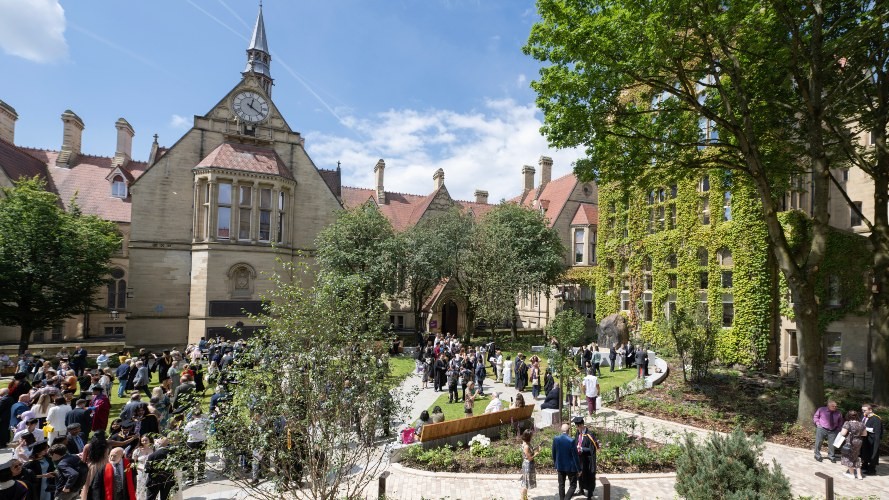
From 2 to 4 September, the Society for European Philosophy (SEP) will hold its annual international conference at Manchester Metropolitan University. Associate Professor Andris Hiršs will present his paper, “Thinking under Ideology: A Case Study of Philosophical Practice in Soviet Latvia,” as part of the Political Philosophy section, chaired by Professor Stella Sandford.
The paper examines the practices of philosophers in Soviet Latvia during the post-war Stalinist period and late socialism, focusing on how philosophical work was sustained, adapted and reinterpreted under ideological constraints. The conference programme and abstracts are available on the Society for European Philosophy website.
Ainārs Kamoliņš Presents Paper at the “XXXII Baltic Conference on the History and Philosophy of Science
11.06.2026.
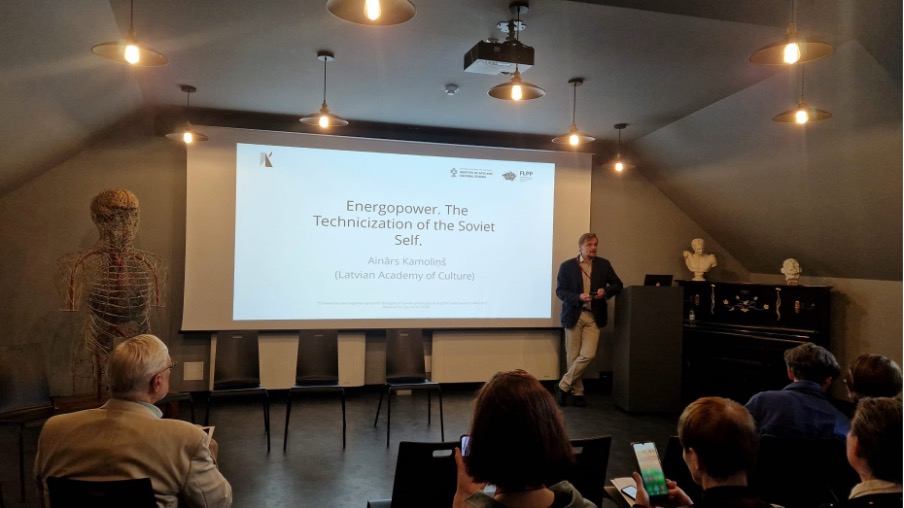
On 11 June 2026, philosopher and Latvian Academy of Culture doctoral candidate Ainārs Kamoliņš presented his paper “Energopower. The Technicization of the Soviet Self” at the international “XXXII Baltic Conference on the History and Philosophy of Science” in Riga. The conference took place from 10 to 12 June and brought together researchers in the history and philosophy of science from the Baltic region and other European countries.
In his presentation, Kamoliņš examined how, during the first half of the 20th century and the early period of the Latvian Soviet Socialist Republic, human consciousness, the nervous system, and the body were interpreted through metaphors of energy and electrical technology. The paper analysed how conceptions of the human being as a kind of “accumulator”, who must accumulate and properly utilise energy, shaped understandings of health, working capacity, psychological balance, and social responsibility.
This year’s “XXXII Baltic Conference on the History and Philosophy of Science” was dedicated to the theme “Making and Remaking Science”, exploring how science has been formed and transformed under different historical and political conditions in the Baltic region.
The paper was developed as part of the project “Conversions and Ruptures: Epistemic Strategies in Latvian Philosophy during the Soviet Period (1944–1991)” (No. lzp-2024/1-0650), funded by the Latvian Council of Science within the Fundamental and Applied Research Programme.
Paula Elmere Defends Her Master’s Thesis “The Experience of the Soviet Occupation in Contemporary Art Exhibitions in Latvia (2013–2023): A Historical Perspective
09.06.2026.
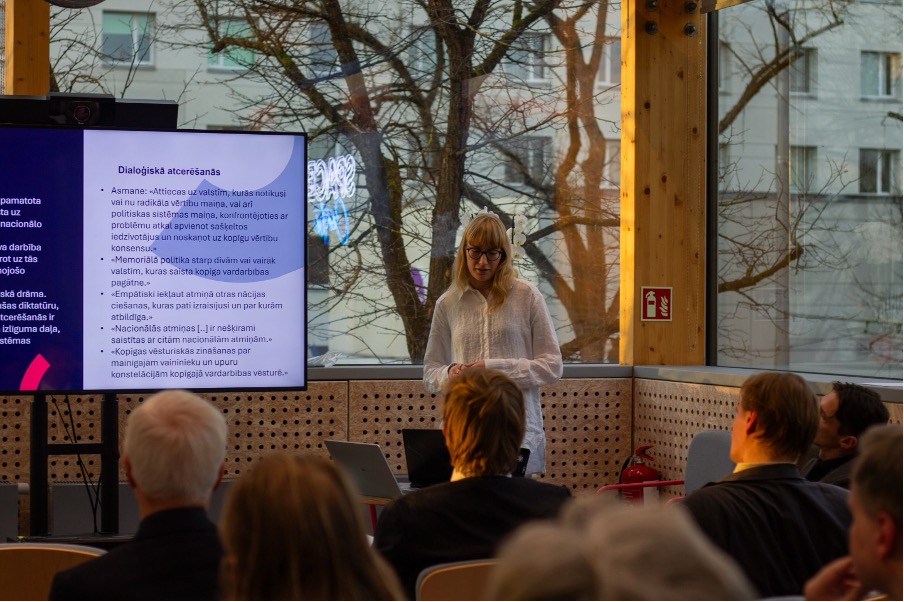
On 5 June 2026, project researcher Paula Elmere defended her Master’s thesis, entitled “The Experience of the Soviet Occupation in Contemporary Art Exhibitions in Latvia (2013–2023): A Historical Perspective,” at the Faculty of Humanities of the University of Latvia, earning a Master’s degree in History.
The thesis examines the interest in the period of Soviet occupation that has emerged in Latvian contemporary art over the past decades. Although both the discipline of history and contemporary art share an interest in the Soviet period, the methods and aspects of interest employed by artists do not always correspond to those of historical scholarship. The study concludes that artworks frequently draw on memory studies and approach the Soviet period through a postcolonial discourse. They also often focus on lesser-known narratives of the past and aspects that have remained marginal within historical scholarship, while emphasising public engagement and the cultivation of empathy. In this way, contemporary art contributes to a more diverse understanding of the recent past.
The Master’s thesis was developed as part of the project “Conversions and Ruptures: Epistemic Strategies in Latvian Philosophy during the Soviet Period (1944–1991)” (Project No. lzp-2024/1-0650).
A Short Film on Research into Latvian Philosophical Thought during the Soviet Period Is Being Produced as Part of the Project
21.05.2026.
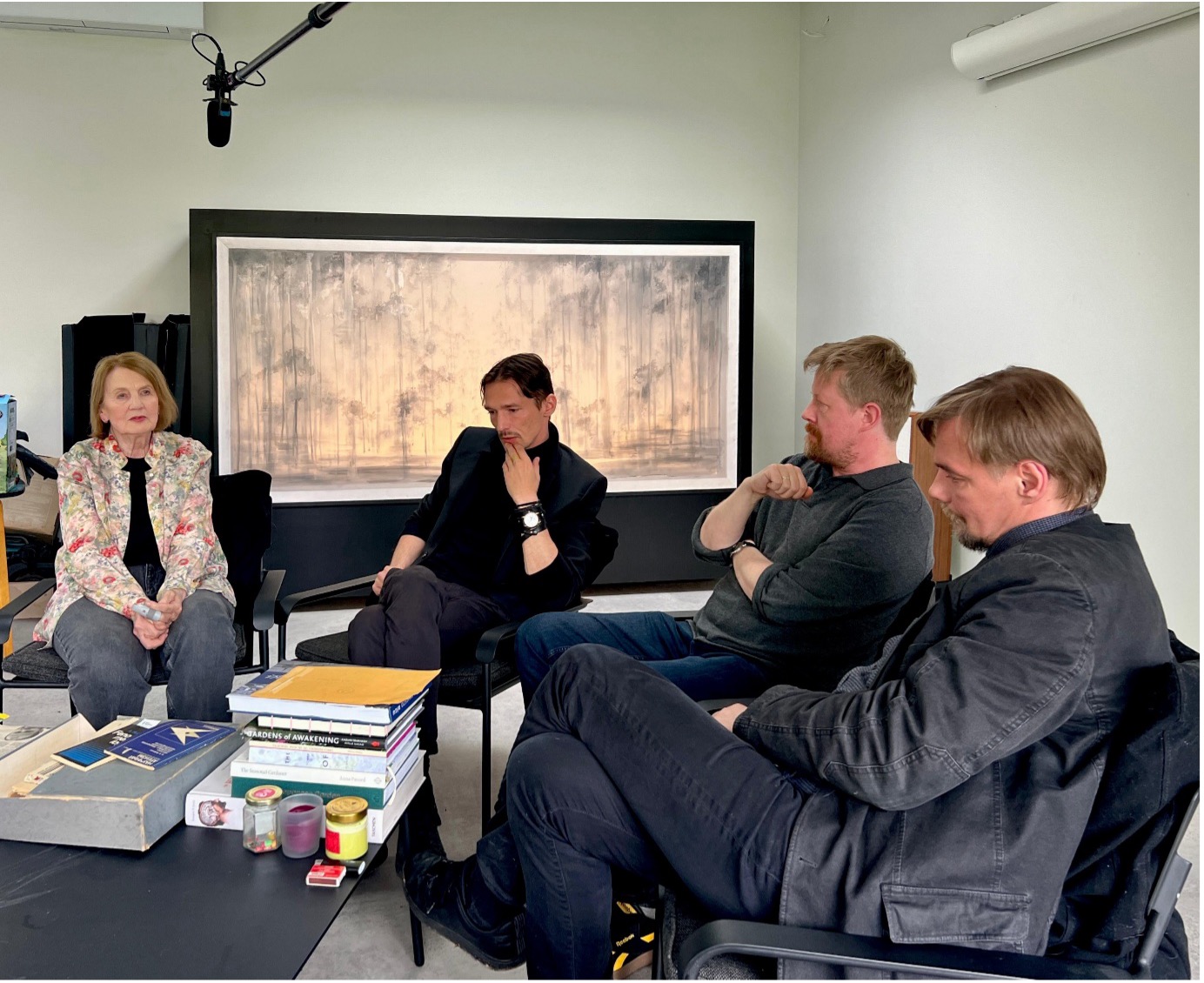
As part of the Fundamental and Applied Research Programme (FLPP) project “Conversions and Ruptures: Epistemic Strategies in Latvian Philosophy during the Soviet Period (1944–1991)” (No. lzp-2024/1-0650), a short film on research into Latvian philosophical thought during the Soviet period is being produced under the direction of filmmaker and Latvian Academy of Culture doctoral candidate Andris Gauja, in collaboration with students of the National Film School of the Latvian Academy of Culture.
The film’s project researchers—philosophers Andrejs Balodis, Andris Hiršs, and Ainārs Kamoliņš—explore how the establishment of a totalitarian regime in post-war Latvia and its collapse in the late 1980s affected the thinking, value systems, and intellectual survival strategies of Latvian philosophers.
During this stage of filming, the team documented the project researchers’ analysis of the interviews they had conducted, as well as their visit to philosopher Māra Rubene.
The Performative Turn Reflected in the Memories of Latvian Philosophers
13.05.2026.
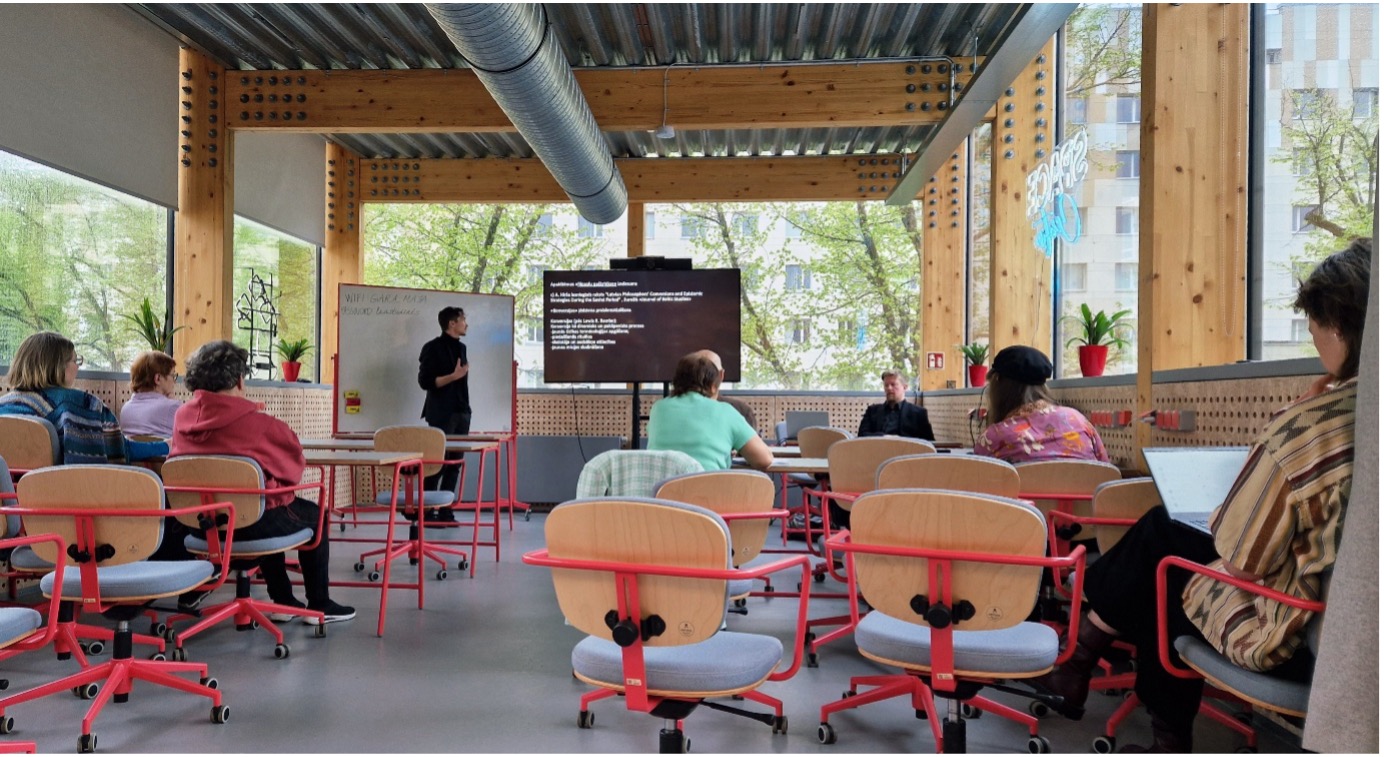
On 13 May 2026, a seminar in the “Discover What You Don’t Know” series took place at the Latvian Academy of Culture’s Gara māja, focusing on the reflection of the performative turn in the memories of Latvian philosophers. During the seminar, project leader Associate Professor Andris Hiršs and principal investigator Associate Professor Andrejs Balodis presented the process of data collection, the methodological framework of the empirical study, and the main challenges involved in conducting interviews. They also presented preliminary findings on how experiences of the Soviet period emerge in the memories of philosophers.
The seminar was organised as part of the project “Conversions and Ruptures: Epistemic Strategies in Latvian Philosophy during the Soviet Period (1944–1991)” (No. lzp-2024/1-0650). Particular attention was given to the selection of theoretical concepts for the analysis and interpretation of interviews, as well as to questions concerning the relationship between philosophy and power in the intellectual environment of the Soviet period.
The seminar concluded with an active discussion involving the audience, fostering a multifaceted dialogue on the topics addressed.
Director Andris Gauja Leads Seminar “Audiovisual Representation of Abstract Narratives: Analysis of the Conversions in Philosophy Project and Other Examples”
25.04.2026.
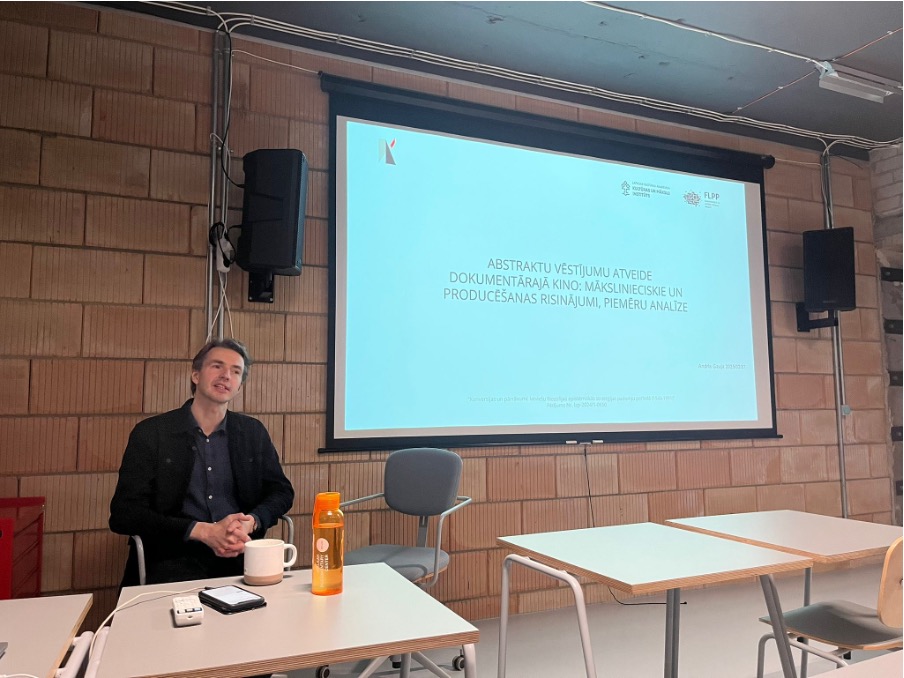
On 17 April 2026, a public seminar entitled “Audiovisual Representation of Abstract Narratives: Analysis of the Conversions in Philosophy Project and Other Examples” took place at the National Film School of the Latvian Academy of Culture. The seminar was led by Andris Gauja, a representative of the research team of the Fundamental and Applied Research Programme (FLPP) project “Conversions and Ruptures: Epistemic Strategies in Latvian Philosophy during the Soviet Period (1944–1991)” (No. lzp-2024/1-0650), director, and professional doctoral candidate.
The seminar, which primarily attracted students of audiovisual arts, provided an opportunity for Gauja to share insights from the project’s ongoing work and introduce the audience to the challenges faced by the project team when translating relatively abstract narratives—such as the intellectual and ideological transformations of Soviet-era philosophers—into audiovisual form.
As Gauja’s theoretical research within his professional doctoral studies focuses specifically on the challenges of audiovisually representing abstract narratives, the seminar explored both the audiovisual components being developed as part of the Conversions and Ruptures project—including a short film and the YouTube discussion series “Project Comments”—and other current outcomes of his research. These included the feature-length academic documentaries Brīnišķīgais tukšums (Wonderful Emptiness) and Brīnišķīgā nāve (Wonderful Death), currently being developed as part of his doctoral research. The seminar also examined documentary films addressing philosophical themes from around the world.
A. Hiršs Publishes Entries in the National Encyclopaedia on Pēteris Laizāns, Ernsts Karpovics, and Dialectical Materialism
The National Encyclopaedia of Latvia has published new entries on the legacy of Soviet philosophy in Latvia and Marxism–Leninism. Pēteris Laizāns (1930–2005) and Ernsts Karpovics (1892–1976) were among the most prominent philosophers in Latvia’s academic environment during the years of Soviet occupation.
They contributed to strengthening interest in the history of ideas in Latvia and addressed questions concerning Marxist–Leninist theory. During the 1920s, extensive debates took place in Soviet Russia concerning the role of dialectical materialism within Marxism–Leninism. Ernsts Karpovics and the Latvian thinker Jānis Stens (1899–1937), who was a private tutor to Joseph Stalin (1878–1953), were among those involved in these discussions.
On Stalin’s orders, the debate was politicised and ultimately culminated in the publication of The Short Course of the History of the All-Union Communist Party (Bolsheviks), in which dialectical materialism was presented as the worldview of the Communist Party, leaving no room for arbitrary interpretations. Philosophical thought consequently acquired an explicitly dogmatic character.
Ainārs Kamoliņš and Andrejs Balodis Present Paper at the “One Hundred Years of Deleuze(ness)” Conference in Vilnius
18.09.-19.09.2025.
The international scientific symposium “One Hundred Years of Deleuze(ness)” took place in Vilnius, Lithuania, on 18–19 September 2025. The symposium was dedicated to the work of the influential French philosopher Gilles Deleuze (1925–1995). It was organised by the Lithuanian Culture Research Institute, the Institute of Philosophy at Vilnius University, and the National Gallery of Art.
Project participants Ainārs Kamoliņš and Andrejs Balodis presented a paper entitled “Building the Energy Machine: The Kegums Hydropower Plant Through the Perspective of Deleuzian Philosophy”, examining the cultural-historical, sociopolitical, and philosophical dimensions of the development of Latvia’s energy infrastructure. Although the construction of the Ķegums Hydropower Plant took place during the interwar period of independent Latvia, the presentation also addressed questions concerning the influence of authoritarian ideology on energy discourses in Latvia, providing a broader context for understanding the energy policies developed under the Soviet totalitarian system.
The application of Deleuze’s theory of assemblage (agencement) to the analysis of energy infrastructure contributes to Ainārs Kamoliņš’s doctoral research and forms part of the broader activities of the project “Conversions and Ruptures: Epistemic Strategies in Latvian Philosophy during the Soviet Period (1944–1991).”
The paper was well received, particularly for its application of Deleuzian philosophical concepts to the study of significant regional cultural-historical phenomena. During the informal networking activities of the symposium, Ainārs Kamoliņš and Andrejs Balodis shared their experience of researching Soviet philosophy and developing doctoral research. They also established contacts and discussed potential avenues for future collaboration with colleagues from Lithuania’s PAScapes Research Centre, which conducts interdisciplinary research on post-authoritarian landscapes.
During the conference, the Creative Museum portal published an interview with Ainārs Kamoliņš and Andrejs Balodis by artist Liene Rumpe, discussing the need for and relevance of interdisciplinary research into large-scale energy infrastructure, with the Daugava hydropower plants serving as a case study in the Latvian context.
International Conference to Explore the Legacy of Soviet Philosophy in Latvia’s Intellectual Landscape
30.10.2025.
On 7 November 2025, the section “Philosophy in Latvia (1944–1991): Conversions and Ruptures” will take place at the Latvian Academy of Culture’s Gara māja (58a Miera Street, Riga). Researchers will present their findings and reflections on the Soviet legacy in Latvia’s philosophical intellectual landscape, the relationship between literature and Soviet philosophy, and the fates and roles of intellectuals under totalitarian regimes. The section will also address recent trends and methodological challenges in researching the Soviet experience.
Andrejs Balodis will discuss the use of qualitative empirical data in intellectual history research and characterise the application of biographical-narrative interpretive methods. Velga Vēvere has analysed publications addressing philosophical questions in Latvia between 1944 and 1953 and will examine the thematic orientations of these publications in her presentation. Sandra Leikarte will present a paper on the fate of composer Jānis Ivanovs (1906–1983) during the Soviet period and his Fifth Symphony. Andris Gauja will explore the possibilities of representing the development of philosophical thought through film. Anna Freiberga will examine the characteristics of Stalinist-era literature in Anna Sakse’s (1905–1981) novel Pret kalnu. Andris Hiršs will present a paper on the practices of criticism and self-criticism in post-war Stalinist Latvia, focusing on the self-criticism statements of Pauls Dāle (1889–1968) and Milda Paleviča (1889–1972). Ainārs Kamoliņš will examine the philosophical views of Latvian civil engineer Arturs Tramdahs (1884–1974) on questions of technology during the interwar period, as well as the campaign waged against him by the Soviet regime and Tramdahs’s subsequent “confession”. Paula Elmere will approach the Soviet period as a “difficult past” and propose using Aleida Assmann’s (b. 1947) concept of cultural memory as a framework for its analysis.
The conference programme will conclude at 19:00 at the Corner House (61 Brīvības Street) with the event “Self-Criticism of Soviet Philosophers: A Performative Discussion.” Within Soviet ideology, self-criticism was a widely practised technique of subject formation, intended to educate citizens and expose enemies. Philosophers who remained in Latvia after 1944 were forced to publicly renounce and express regret for their earlier views. The event will feature performative re-enactments of the self-criticism statements of Pauls Dāle and Milda Paleviča, followed by a discussion on the role of intellectuals under totalitarian rule. The roles will be performed by Daiga Kažociņa (Paleviča) and Kārlis Reijers (Dāle). The discussion will be moderated by Andris Hiršs, Andrejs Balodis, and Ainārs Kamoliņš. Admission is free.
In November, the project will also launch the conversation series “Project Comments”, which will present a video feature every two weeks with project participants and invited guests—researchers in the fields of culture, art, and the humanities. The conversations will explore the visible and invisible presence of the Soviet legacy in Latvia’s contemporary public sphere. The video series will be available on the Latvian Academy of Culture’s YouTube channel and is being produced in collaboration with director and LKA doctoral student Andris Gauja, cinematographer Dāvids Smiltiņš, Daiga Livčāne, and students of the Department of Audiovisual Arts.
The research project “Conversions and Ruptures: Epistemic Strategies in Latvian Philosophy during the Soviet Period (1944–1991)” (No. lzp-2024/1-0650) is funded by the Latvian Council of Science within the Fundamental and Applied Research Programme.
Project participants Ainārs Kamoliņš and Andrejs Balodis took part in the Central and Eastern European Society for Phenomenology (CEESP) conference “Phenomenology and Technology”, which took place in Riga at the beginning of September 2025.
03.-05.09.2025
In their joint presentation, “Postphenomenological Analysis of the Soviet Sublime: Pļaviņas Hydropower Plant”, the researchers examined the experience of Soviet-era energy infrastructure from the perspective of philosophy, phenomenology, and the humanities, thus connecting the research strands of Soviet industrial and intellectual heritage.
The conference presentation is related to A. Kamoliņš’s doctoral thesis developed within the academic doctoral programme at the Latvian Academy of Culture.
The conference was widely attended by the European philosophical community, which allowed the Conversion project participants to successfully engage in networking. They were able to discuss future collaboration opportunities with researchers from European countries where the study of Soviet intellectual heritage is also actively pursued, including participation in academic conferences and collective volumes.
Article by Liene Rumpe on the research work and field expeditions of Ainārs Kamoliņš and Andrejs Balodis: [Liene%20Rumpe,%20Ekspedīcija%20HES.%20Pirmā%20daļa,%20Creative%20Museum,%20publicēts%2026.08.2025]Liene Rumpe, Expedition HES. Part One, Creative Museum, published 26.08.2025
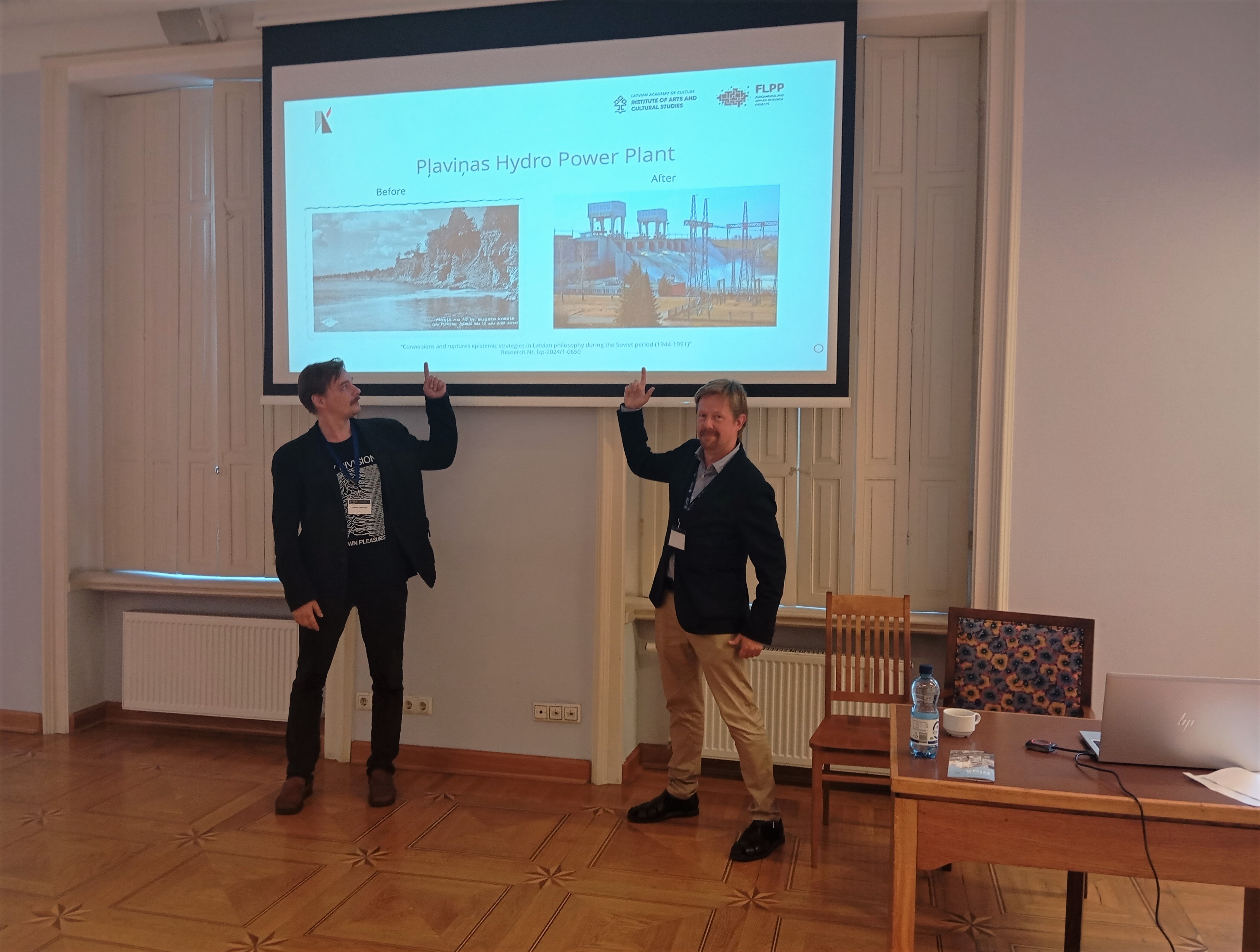
Researchers at the Latvian Academy of Culture contribute new insights into the development of Latvian philosophical thought during the Soviet era
03.06.2025
In January 2025, a new research initiative was launched at the Latvian Academy of Culture under the Fundamental and Applied Research Programme: “Conversions and Ruptures: Epistemic Strategies in Latvian Philosophy during the Soviet Period (1944–1991)” (Project No. lzp-2024/1-0650). The study focuses on two critical periods of transformation (1944–1953 and 1981–1991) during which the relationship between intellectuals and political power became particularly significant. The project will result in both academic and popular science publications, as well as presentations at international conferences and public events.