Preparing for War: Meanings of War in Public Discourse and Youth Perception in Latvia
Project leader: Maija Spuriņa (PhD)
Project No: lzp-2024/1-0604 Project implementation: 01.01.2025.–31.12.2027.
Project funding: 299 829,00 EUR Funded by: Latvian Council of Science
Contacts: PhD Maija Spuriņa, maija.spurina@lka.edu.lv
The project ‘Preparing for War: Meanings of War in Public Discourse and Youth Perception in Latvia’ (No. lzp-2024/1-0604) is funded by the Latvian Council of Science.
Abstract
The research project proposes to examine militarization from a sociocultural perspective, using the case of Latvia, which, since February 2022, has undergone exceptionally intensive militarization, including increased military spending, the introduction of universal conscription, and integration of military training in general education programs. The project aims to uncover how war and war-making are culturally framed by elites in public discourse and to see how this cultural framing resonates with the experiences of the youth. The study will contribute to the cultural strand within the field of the sociology of war that acknowledges war-making as a cultural process, where legitimization and cultural framing affect and are affected by the war. The project is guided by the strong program of cultural sociology, collective memory studies, and sociology of emotions. It will analyze willingness to defend one’s country as related to the attachment or bonds developed between the state and its constituents and explore how that bond appears in the context of current militarization, both at the level of discourse and in individual lived experiences. Fieldwork will encompass three components: a discourse analysis of media, open-ended discussions, and in-depth interviews with high-school students. The two latter will be focused on participants’ visions of the future, understanding of war and citizenship, and views on compulsory conscription.
Project team
Maija Spuriņa (Project Leader)
Iveta Ķešāne (Project participant)
Liene Ozoliņa (Project participant)
Sabīne Ozola (Student project participant)
Eva Marhilēviča (Student project participant)
Ksenija Simakova (Student project participant)
Laura Lutoka (Student project participant)
Keita Zariņa (Student project participant)
data management plan
The data management plan for the research project "Preparing for War: The Meanings of War in Latvian Public Discourse and Perceptions of Youth" is available here (https://doi.org/10.5281/zenodo.15090138)
Project activities
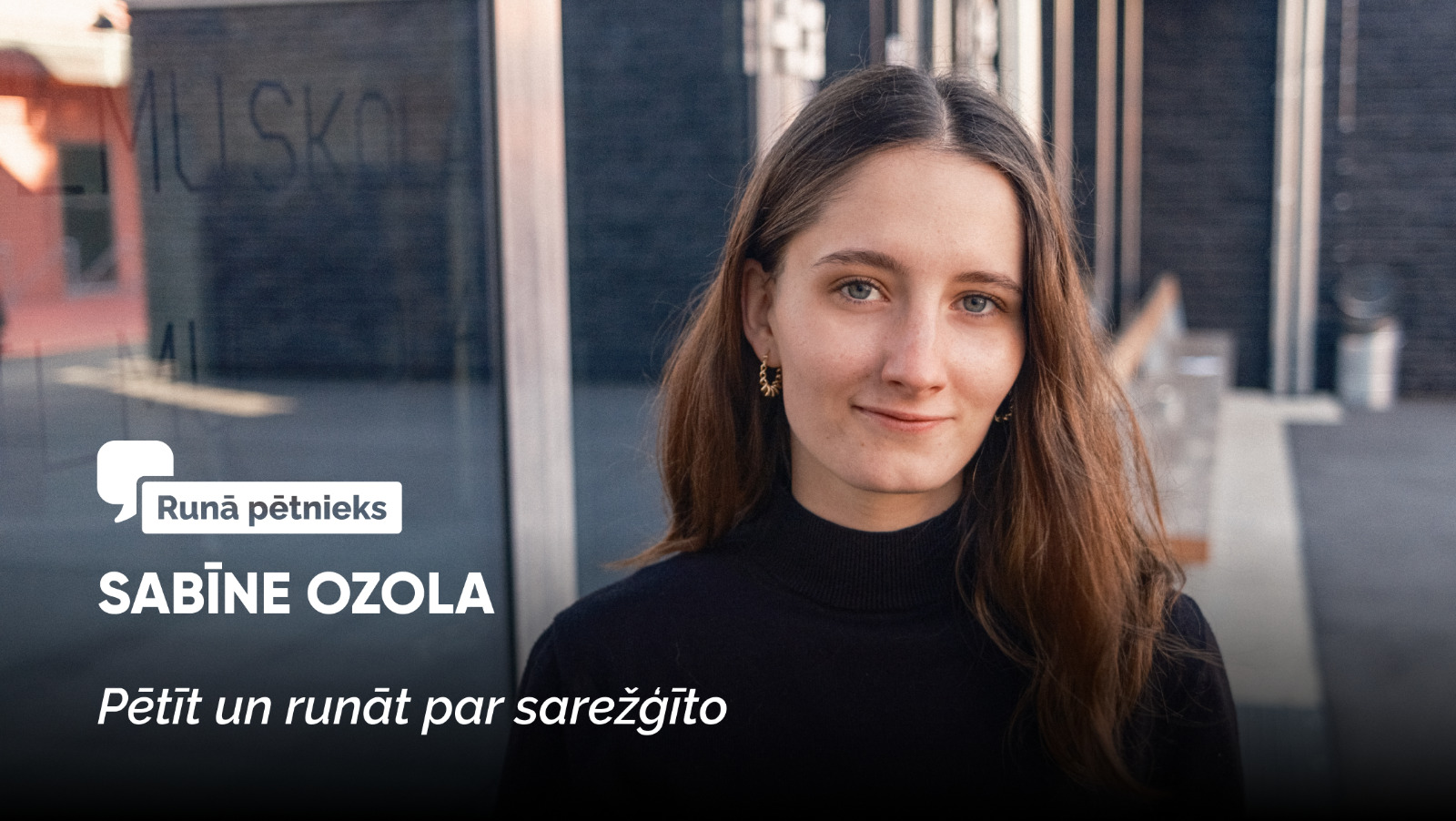
Opinion Article Published: “Researching and Speaking About the Difficult”
05.02.2026.
Sabīne Ozola, Research Assistant at the LAC Institute of Arts and Cultural Studies, shares her experience in the opinion column “Runā pētnieks” (“The Researcher Speaks”), reflecting on how to engage young people in discussions about war, insecurity, and other emotionally challenging topics by creating a safe and supportive conversational environment. The article compiles key insights and practical recommendations derived from the international training programme “How to Talk About War?”
The opinion article is available for reading here (in Latvian): https://www.lka.edu.lv/lv/aktuali/jaunumi/petit-un-runat-par-sarezgito/
Young Researchers’ School Discusses How to Talk to Young People About War
02.02.2026.
On 2 February, Sabīne Ozola, Research Assistant at the LAC Institute of Arts and Cultural Studies, participated in a seminar organised by the LAC Young Researchers’ School (JPS).
During the seminar, she presented her involvement in the research project “Preparing for War: Meanings of War in Public Discourse and Youth Perception in Latvia” and shared insights gained from the international training programme “How to Talk About War?”. The session developed into an in-depth discussion on how to address the topic of war with young people and the challenges associated with such conversations.
In addition, the seminar provided JPS participants with an opportunity to assume the role of researchers, analyse the specificities of working with a youth target audience, and critically reflect on the challenges inherent in this field of inquiry.
Research Data on the Discourse of Militarisation in Latvia Presented at a Conference in Rome
21.-23.01.2026.
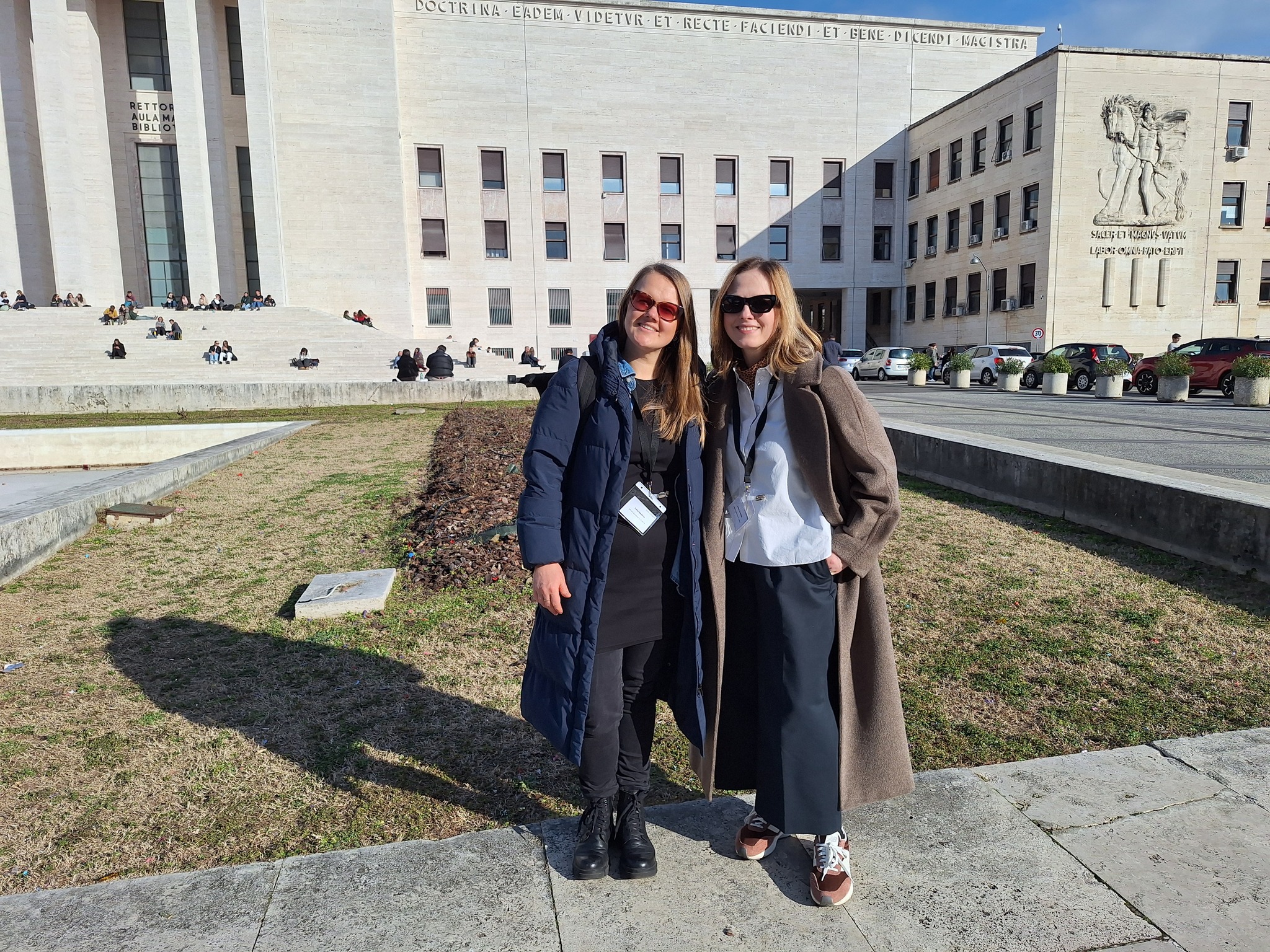
From 21 to 23 January, Liene Ozoliņa, Leading Researcher at the LAC Institute of Arts and Cultural Studies, and researcher Iveta Ķešāne participated in the conference of the European Sociological Association’s Sociology of Culture Research Network, “Cultural Vulnerabilities and Planetary Problems: Creating New Sociological Studies of Culture Between Fragility and Fortitude,” held at Sapienza Università di Roma.
At the conference, the researchers delivered a paper entitled “The Shifting and Contradictory Symbolic Codes in Legitimizing Militarization in Latvia: The Discourse Surrounding the Introduction of Mandatory Conscription and Military Education Programs in General Education.” In their presentation, they shared initial findings from the research project “Preparing for War: Meanings of War in Public Discourse and Youth Perception in Latvia”. Drawing on symbolic code theory, the researchers analysed how the State Defence Service and the subject of National Defence Education have been represented in Latvian public media since 2014.
Conference programme: https://www.annalisatota.it/wp-content/uploads/2026/01/Cultural-Vulnerabilities-programme.pdf
Project Participant Attends Training “How to Talk About War?”
30.11.-05.12.2025.
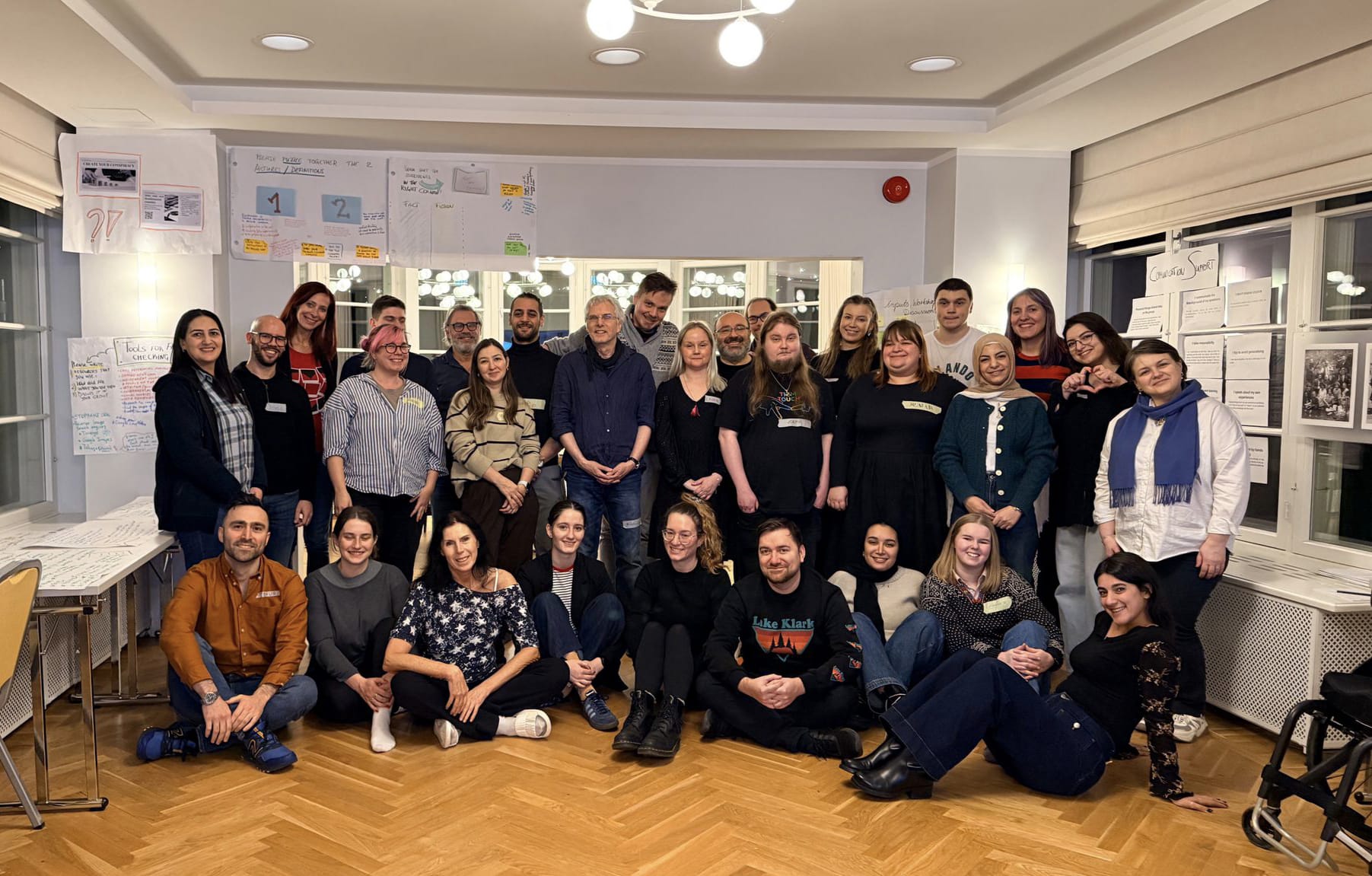
From 30 November to 5 December, Sabīne Ozola, Research Assistant at the LAC Institute of Arts and Cultural Studies, participated in the international training programme “How to Talk About War?”, held in Pärnu, Estonia.
The training brought together youth workers and researchers in the field of youth studies from more than ten countries, united by a common objective: to acquire methods and tools for discussing controversial and complex topics with young people, to create a safe environment for open dialogue, and to strengthen the competencies and emotional resilience of youth workers and researchers.
During the programme, participants engaged with a range of non-formal education methods designed to involve young people in meaningful and informed discussions about war and armed conflict. The knowledge and skills gained will be applied in the forthcoming fieldwork phase of the project “Preparing for War: Meanings of War in Public Discourse and Youth Perception in Latvia,” particularly in discussions with young people. Furthermore, it is planned to disseminate the acquired expertise among colleagues whose work focuses on youth research and the facilitation of dialogue on complex issues.
Training summary: https://beyondb.eu/peace-work-how-to-talk-about-war/

Project Participant Takes Part in the International Conference of the Kharkiv State Academy of Culture
20.11.2025.
On 20 November, Eva Marhileviča, Research Assistant at the LAC Institute of Arts and Cultural Studies, participated remotely in the international conference “Culture Studies and Social Communications: Innovative Development Strategies” organised by the Kharkiv State Academy of Culture.
In the section “Current Issues in Audiovisual Culture and Media Communications,” she delivered a presentation entitled “Preparing for War: How Latvian State Media Shape Discourse on Universal Conscription and National Defence Training.” The paper examined how the discourse surrounding the State Defence Service has evolved over time within Latvian public media, with particular attention to the dimensions of freedom and calculation in its framing.
The conference programme is available at: http://rio-khsac.in.ua/konfer-en.html
.jpg)
Researchers Participate in the International Conference of the Latvian Academy of Culture
7.11.2025.
On 7 November, Liene Ozoliņa and Maija Spuriņa, Leading Researchers at the LAC Institute of Arts and Cultural Studies, together with researcher Iveta Ķešāne, participated in the international conference of the Latvian Academy of Culture, “Cultural Crossroads XIX,” with a paper entitled “Symbolic Codes and Memory in the Legitimation of Militarization in Latvia: The Discourse Justifying National Defence Education and the State Defence Service.”
The presentation outlined the principal findings of an analysis of Latvian public discourse (2013–2025) concerning the introduction of the State Defence Service (VAD) and National Defence Education (VAM). Drawing on the cultural-sociological approach developed by Jeffrey C. Alexander and Philip Smith, the researchers examined the symbolic codes employed by various actors to legitimise the incorporation of VAD and VAM into general education programmes, as well as the type of relationship between state and society reflected in this discourse. Furthermore, applying Aleida and Jan Assmann’s distinction between political and communicative memory, the paper illuminated how contemporary militarisation policies are shaped by communicative memories of the Soviet Army.
Book of abstracts (in Latvian): https://drive.google.com/file/d/1eWbMt5t40g_44LoN2uDMVRVKc0SsGLVq/view
Conference programme (in Latvian): https://drive.google.com/file/d/1i8cK9ShsQVSRrQlamw1SR5qQR-0BoWw-/view
First Project Findings Presented at the Young Researchers’ School
3.11.2025.
On 3 November, Maija Spuriņa, Leading Researcher at the LAC Institute of Arts and Cultural Studies, and researcher Iveta Ķešāne participated in a meeting of the Young Researchers’ School at the Latvian Academy of Culture. During the session, emerging researchers were introduced to the context, research questions, and planned methodology of the project “Preparing for War: Meanings of War in Public Discourse and Youth Perception in Latvia”. The first findings from the analysis of public discourse were also presented, based on qualitative data coding conducted using the “Dedoose” platform. The meeting provided an opportunity to engage in discussion about the research process, methodological challenges, and the use of digital tools in qualitative analysis.
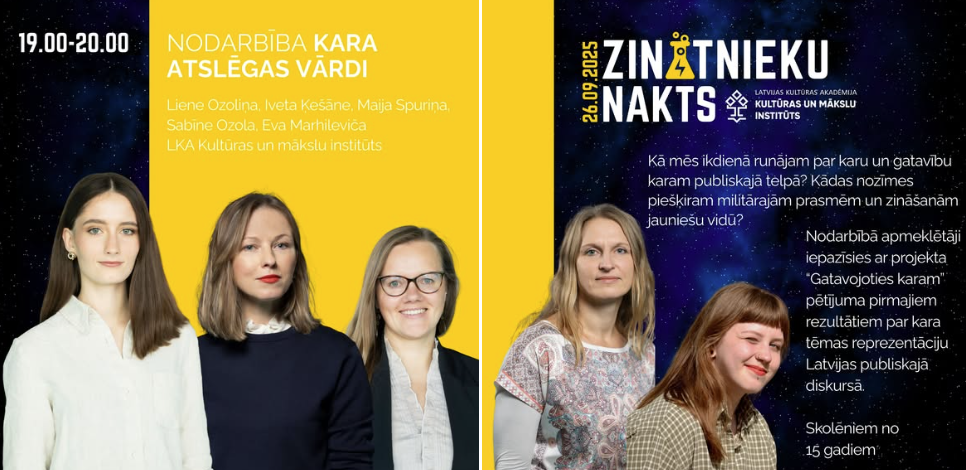
Workshop “Key Words of War” Implemented for Youth within “Researchers’ Night 2025”
26.09.2025.
Within the framework of “Researchers’ Night 2025,” Liene Ozoliņa and Maija Spuriņa, Leading Researchers at the LAC Institute of Arts and Cultural Studies, together with researcher Iveta Ķešāne and research assistants Eva Marhileviča and Sabīne Ozola, invited young people to participate in the workshop “Key Words of War”.
During the session, participants were introduced to the first findings of the study “Preparing for War: Meanings of War in Public Discourse and Youth Perception in Latvia”, focusing on the representation of war in Latvian public discourse. They explored how the media frame young people’s military skills and knowledge through symbolic codes such as “readiness”, “freedom”, “masculinity”, “security”, and “patriotism”, among others.
In the interactive segment of the event, participants selected images they associated with security and national defence and collaboratively created a “war keyword cloud”, engaging in discussion about differing meanings and interpretations.
Event programme (in Latvian): https://drive.google.com/file/d/1-msF8sRQ8lNRxQ2vC-TFnWA6U99UdAce/view
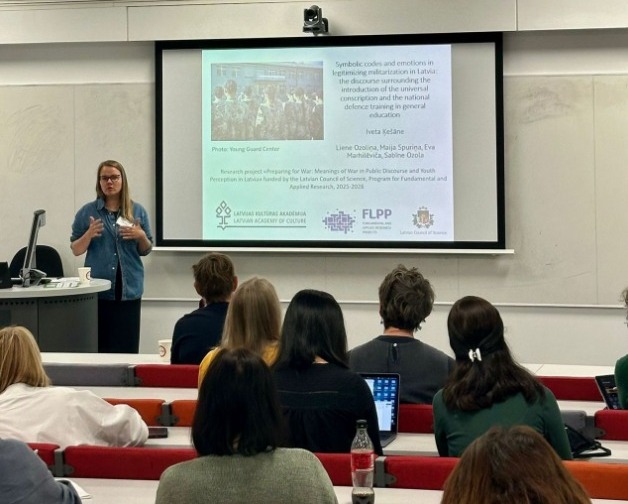
Militarisation and Emotions – Research Findings Presented in Belfast
26.-29.08.2025.
From 26 to 29 August, Iveta Ķešāne, researcher at the LAC Institute of Arts and Cultural Studies, participated in the conference of the European Sociological Association’s Sociology of Emotions Research Network, “Emotions in Post-/Conflict & Post-/Crisis Societies,” held at Queen's University Belfast. The conference focused on the role of emotions in societies experiencing conflict and post-conflict or post-crisis conditions.
At the conference, she presented a paper entitled “Symbolic Codes and Emotions in Legitimizing Militarization in Latvia: The Discourse Surrounding the Introduction of Mandatory Conscription and Military Education Programs in General Education”. The presentation outlined the results of the first phase of the project “Preparing for War: Meanings of War in Public Discourse and Youth Perception in Latvia”, based on media discourse analysis. In addition, Iveta chaired a conference session dedicated to emotions in contexts of protest, opposition, and social movements.
Conference programme: https://esarn11midtermconferencebelfast.wordpress.com/programme/
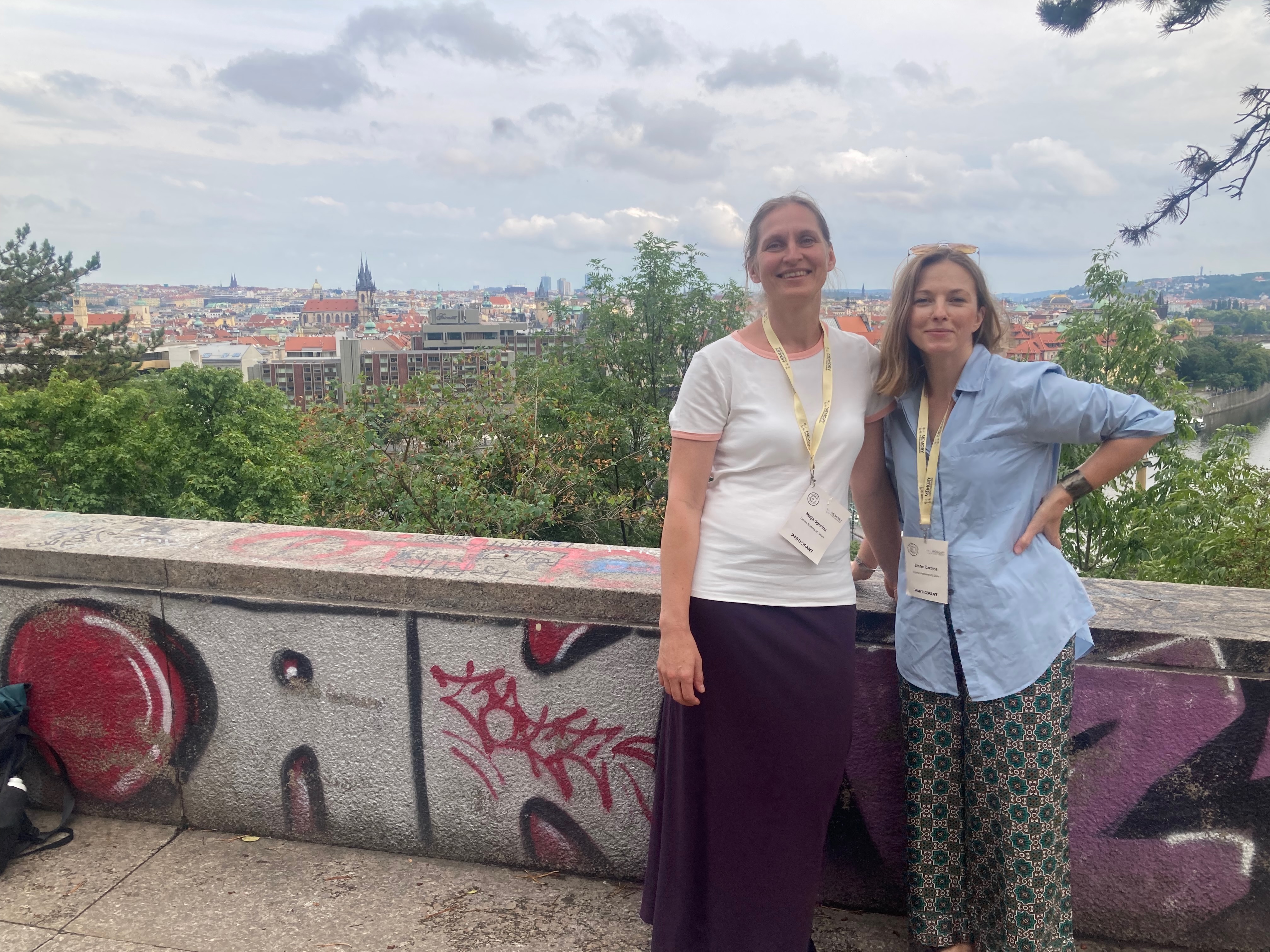
Leading Researchers Maija Spuriņa and Liene Ozoliņa Participate in the Memory Studies Association Conference in Prague
30.07.2025.
From 14 to 18 July, Maija Spuriņa and Liene Ozoliņa, Leading Researchers at the LAC Institute of Arts and Cultural Studies, participated in the annual conference of the Memory Studies Association in Prague. As part of the conference programme, they presented a paper entitled “Mnemonic Framing of War and Militarization: A Research Project in Latvia in the Context of the Russian–Ukrainian War”, prepared within the framework of the project “Preparing for War: Meanings of War in Public Discourse and Youth Perception in Latvia”.
The presentation addressed both the overall conceptual design of the project and its first empirical observations derived from discourse analysis. The themes of war and militarisation, as well as the context, development, and impact of the Russian–Ukrainian war, featured prominently across numerous papers and panels at the conference. The researchers’ presentation attracted considerable interest.
Building on one of the observations discussed – namely, that contemporary policymakers promoting militarisation must take into account society’s negative memories and associations with the Soviet Army – the researchers and colleagues from other countries concluded that the field of memory studies would benefit from an internationally comparative study of memories of militarisation, encompassing both the idealisation of past militarisation and its associated traumas.
More about the conference: https://msaprague2025.dryfta.com/
Feature in “Kultūras Ziņas” on the Launch of the Project
12.09.2024.
A feature broadcast on the programme “Kultūras Ziņas” (“Culture News”) offers an overview of the project “Preparing for War: Meanings of War in Public Discourse and Youth Perception in Latvia”, which has recently received funding from the Fundamental and Applied Research Projects competition of the Latvian Council of Science.
In the segment, Iveta Ķešāne, researcher at the LAC Institute of Arts and Cultural Studies, outlined the project’s objectives, planned activities, and anticipated outcomes.
The feature is available at (in Latvian): https://replay.lsm.lv/lv/skaties/ieraksts/ltv/337008/apstiprinati-fundamentalo-un-lietisko-petijumi-projekti-kultura